Information
ABSTRACT
Title: Utilizing the Five Spirits to Advance Five Element Theory
School/University: Five Branches University
Name of Researcher: Dr. Cong Thanh Nguyen, DAOM
Introduction: Five-element theory never evolved beyond a geocentric worldview and drifted away from its mystical origins. If all phenomena are expressions of the five elements, identifying the principles symbolized by the five spirits becomes essential to understanding complex topics and bridging gaps in conceptual precision. Through deep exploration of classical texts while keeping contextual limitations in mind, the integration of spiritual wisdom with modern scientific observations of nature proves beneficially revelatory. With respect to the two existing models of the five elements, considerations were made to expand and reconfigure the elements' placements to better match the dynamic nature of the universe.
Method: Consistency in commentary by experts in Classical Chinese medicine was relied upon to synthesize descriptions of the five spirits and to create provisional identities for the principles. To guide the innovation of a dynamic model of the five elements, priority was placed in upholding yin-yang relationships throughout. Borrowing the structure of the compass model, shen was placed at the center as the sovereign with hun, yi, po, and zhi at the outer positions. Lastly, the new model was extrapolated to assess its applicability and evaluate new findings.
Results: Similar to the four seasons represented in the earth-centered model, the fire-centered model revealed the four seasons of heaven. Furthermore, connections were made that illuminate the four seasons of heaven as the four principles of yin-yang.
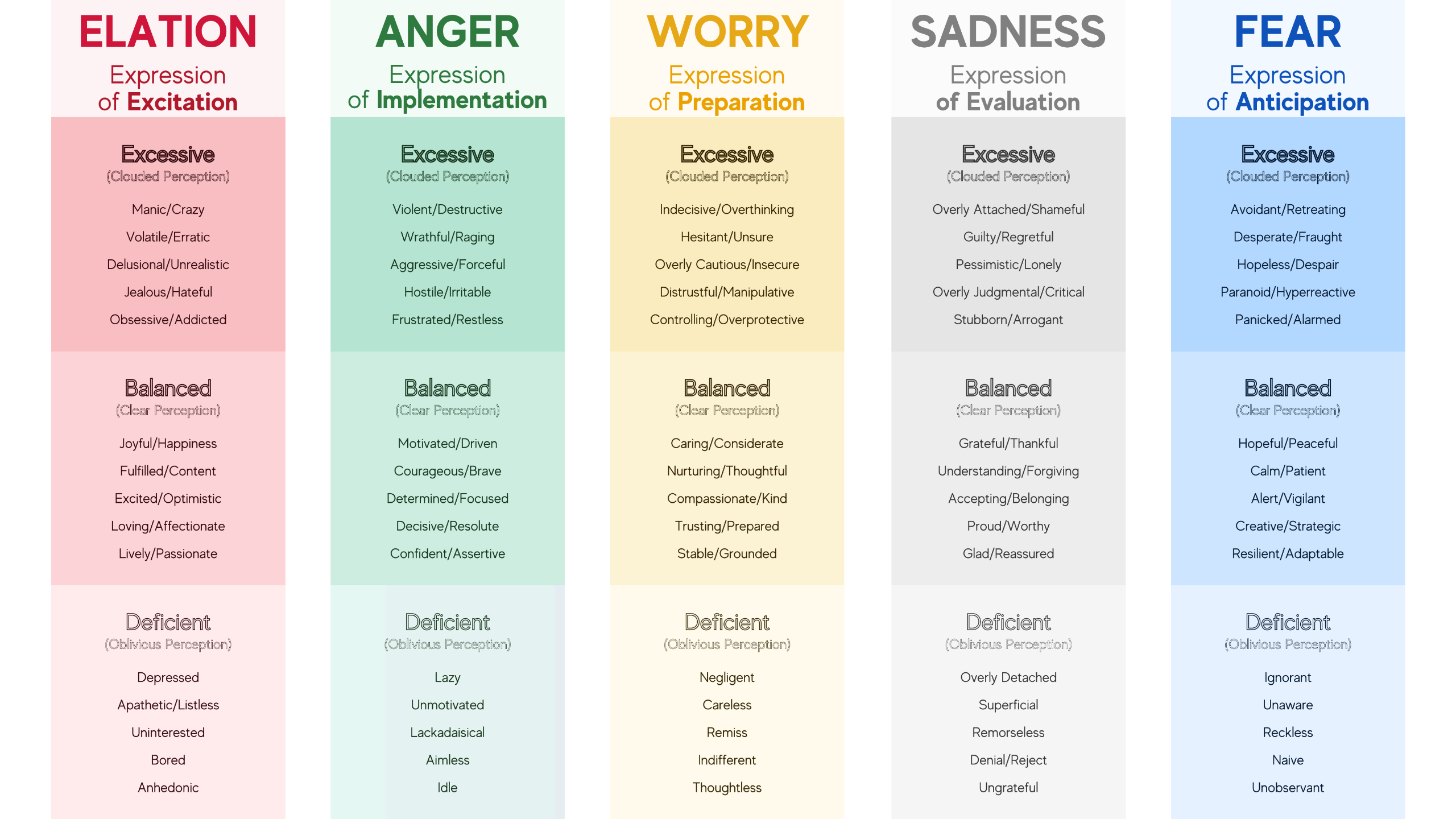
Discussion/Conclusion: With renewed interest in theoretical advancement and the integration of mystical and scientific insights, new opportunities emerge for the evolution of medicine. For example, by extrapolating from five-element principles, a framework was built that categorized emotional expressions into five primary emotions and outlined the functions and effects of each.
Capstone Defense
July 21st, 2025

The Five Symbolic Directions
FIRE
WOOD
EARTH
METAL
WATER
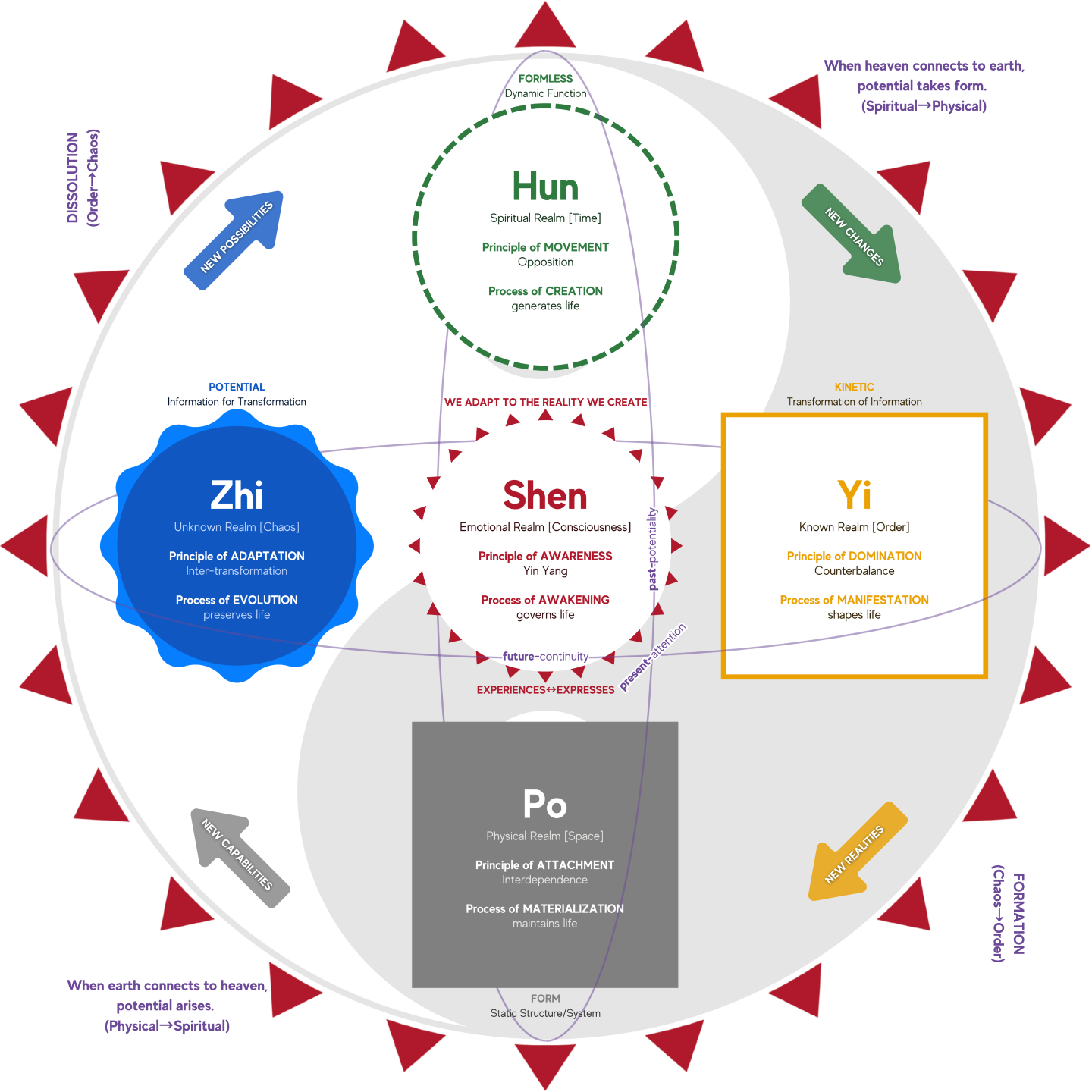
Five Element Model of Heaven
This model is to be considered as addition to the Conventional (wheel) model, which best depicts the generating/controlling cycles; and the Five Evolutive Phases (compass of earth) model, which best depicts the seasons and directions on earth.
A fixed model cannot accurately represent the dynamic universe.
Rather than warp our understanding of the universe to fit a fixed/static model, what would make more sense is to expand our model to be as dynamic as the universe.
Therefore, each model illustrates a certain context within a larger dynamic model of the universe.
Would different configurations of the five elements be feasible and what context would they reveal?
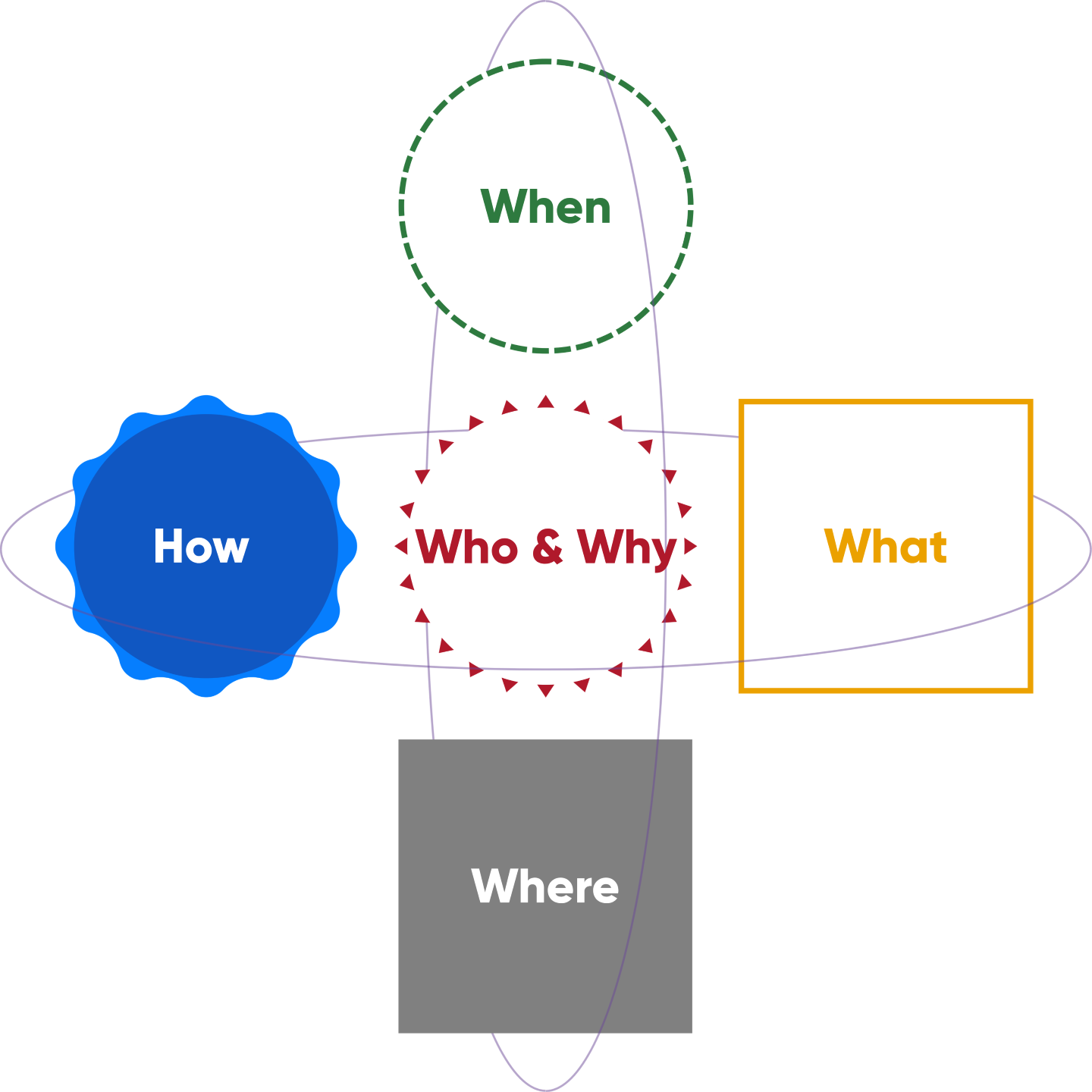
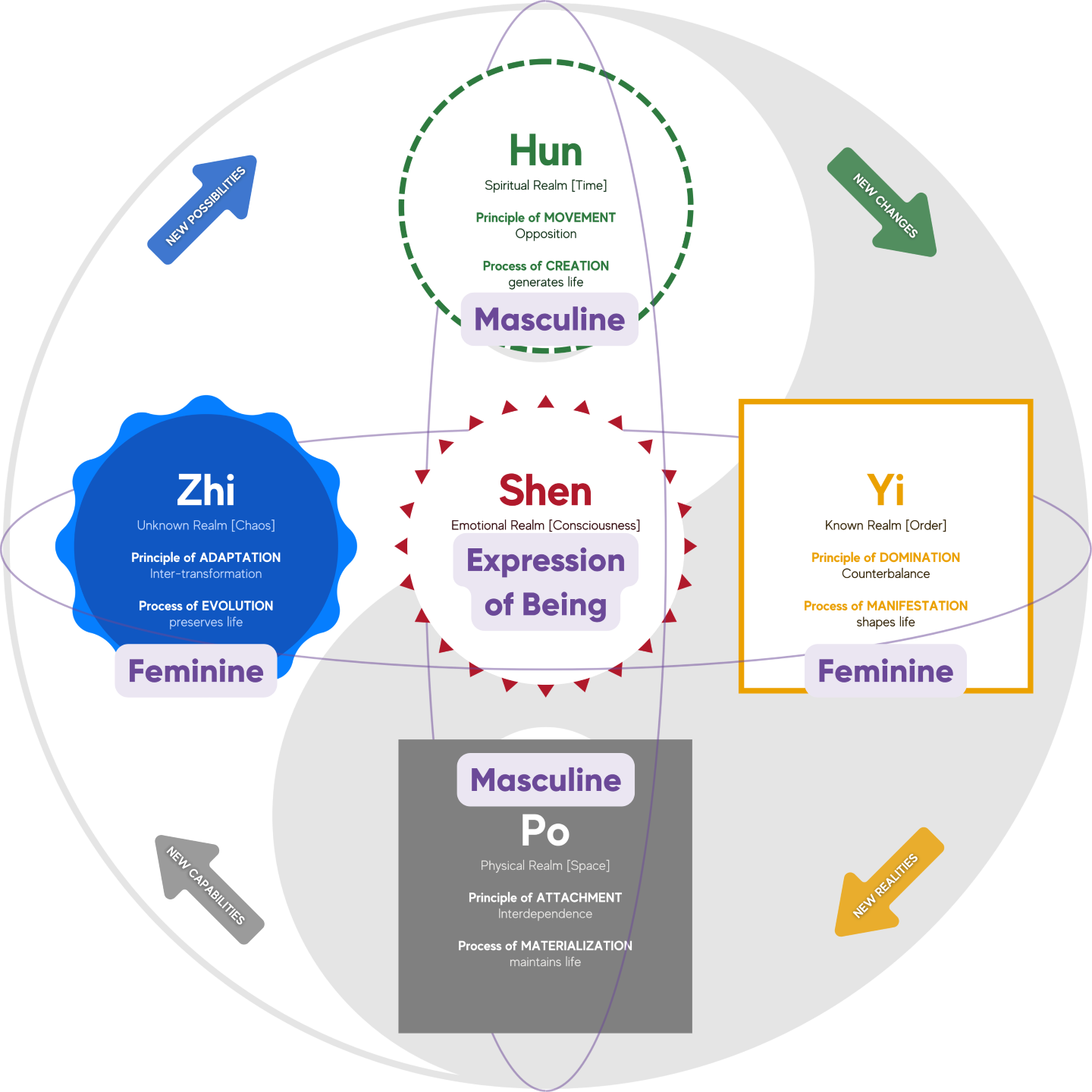
The Five Element Model of Heaven shows:
1. Each spirit represented as different images that symbolize their unique characteristics.
2. Each spirit provisionally identified as a principle and as a process.
3. Shen placed at the center of heaven as the sovereign governing the other spirits.
4. The collective consciousness is represented as "big" shen.
5. The individual consciousness is represented as "little" shen.
6. The yin-yang pair of hun-po as a potentiality spanning heaven and earth.
7. The yin-yang pair of yi-zhi as a continuity at the heart level.
8. Yi as the pivot point between hun and po. Zhi as the pivot point between po and hun.
9. The outer spirits of hun-yi-po-zhi as the four seasons of yin-yang.
10. The four seasons of yin-yang as the four principles of yin-yang.
11. Shen as the intersection of the four yin-yang principles .
12. Hun-yi-po as the process of formation. Po-zhi-yi as the process of dissolution.
13. Hun-po as the space-time continuum, yi-zhi as order and chaos, and shen as the source of all.
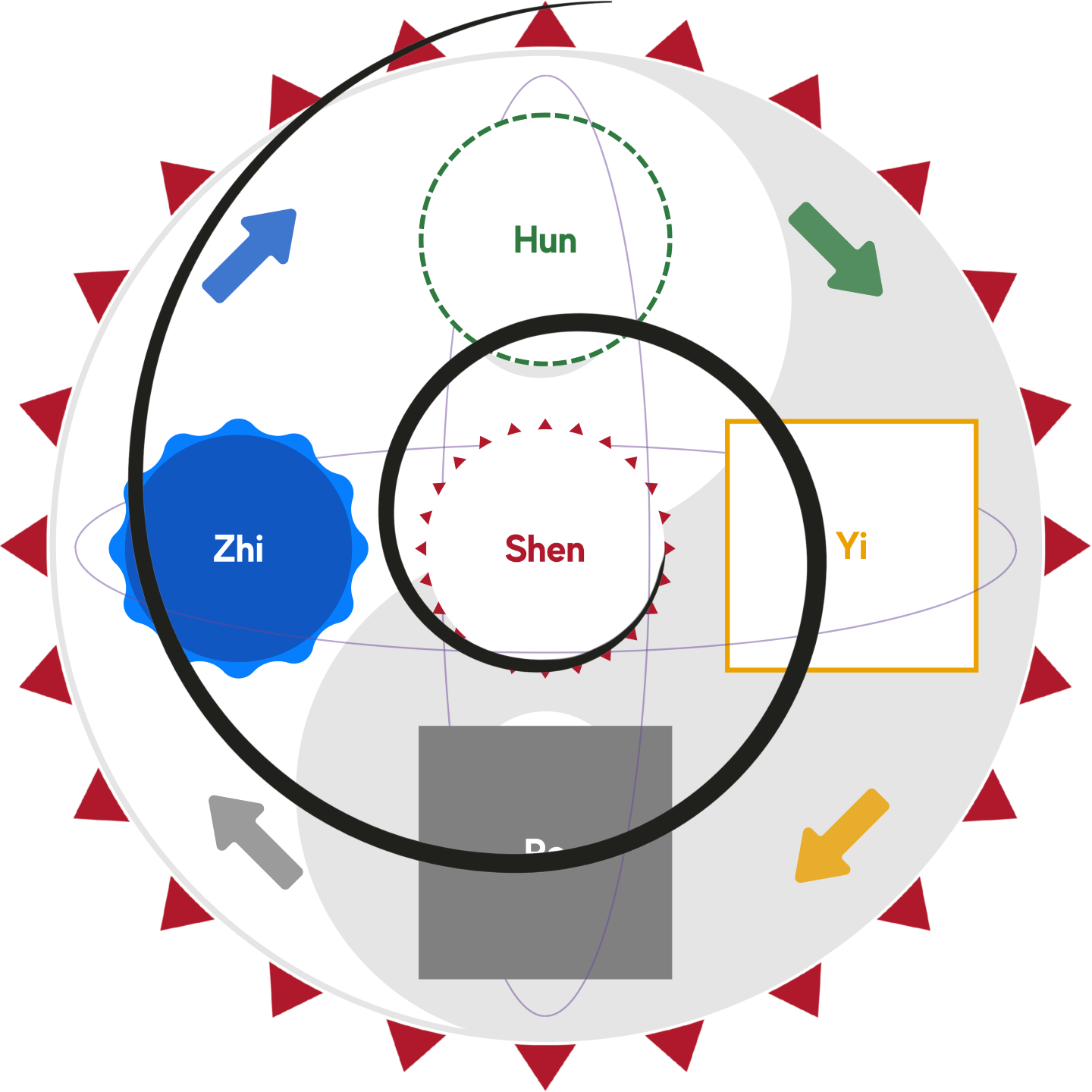
14. From the most subtle to the most dense, the spirits of shen-hun-yi-po-zhi creates a spiral.
15. The five elements are clearly and firmly established as an extension of yin and yang.
More Images and Considerations
1. The universe moves in a spiral from the most subtle shen to the most dense zhi.
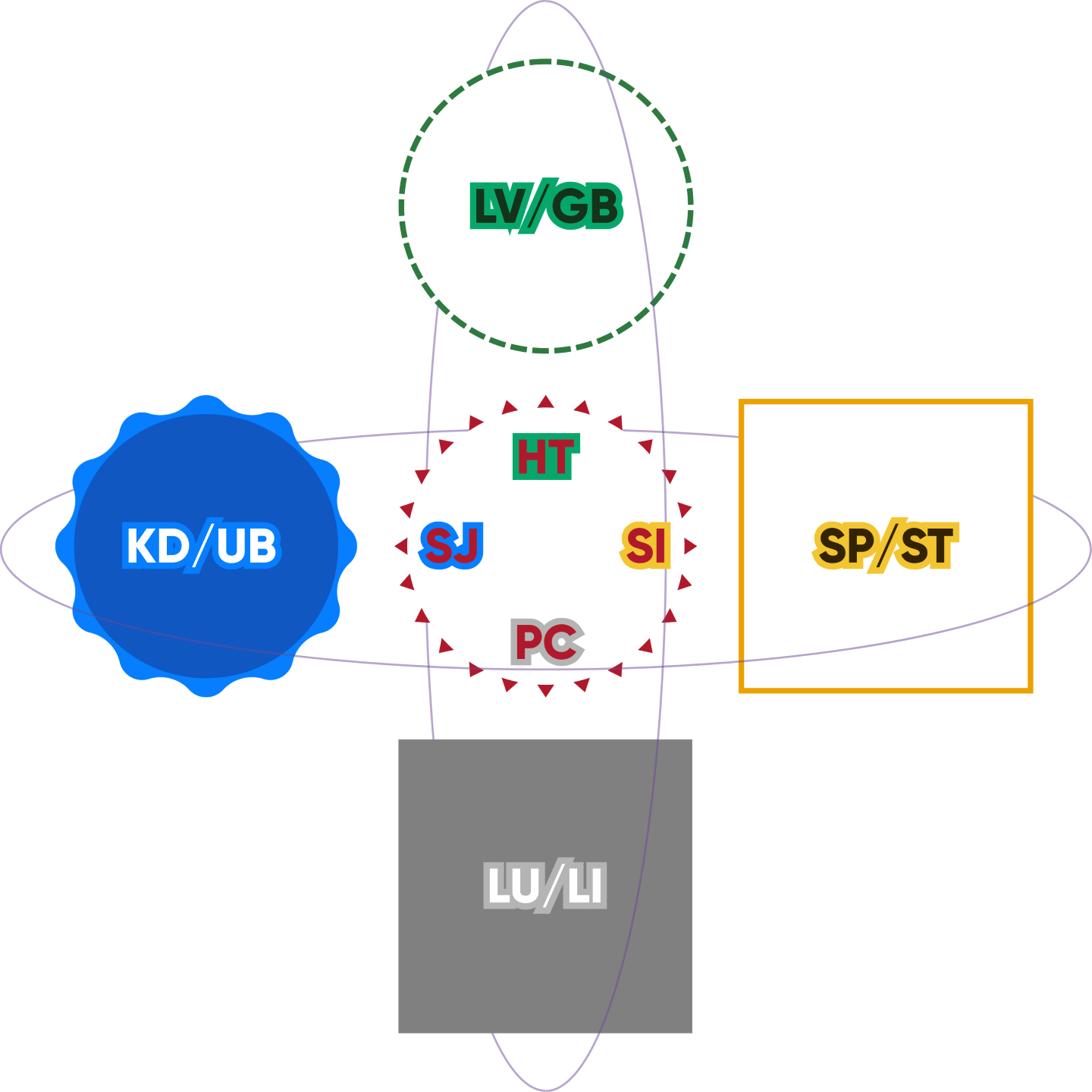
2. Does each of the 4 fire organs have a close association with one of the other organs/elements/spirits? I think so!
3. How the 5 spirits relate to the 6 types of questions.
4. Based on their characteristics, hun-po relates to the masculine while yi-zhi relates to the feminine.
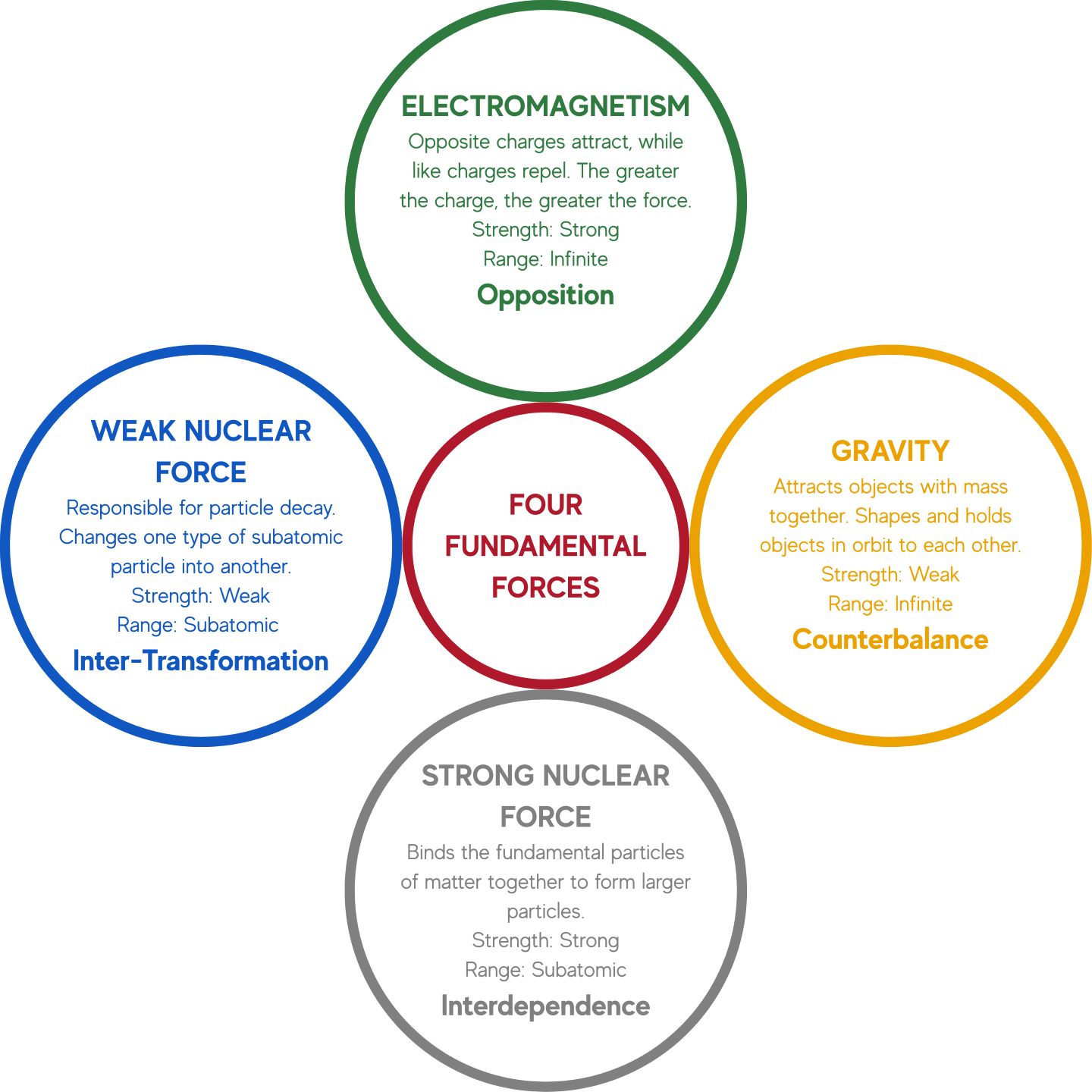
5. The Four Fundamental Forces in physics have a possible relation to the four yin-yang principles.
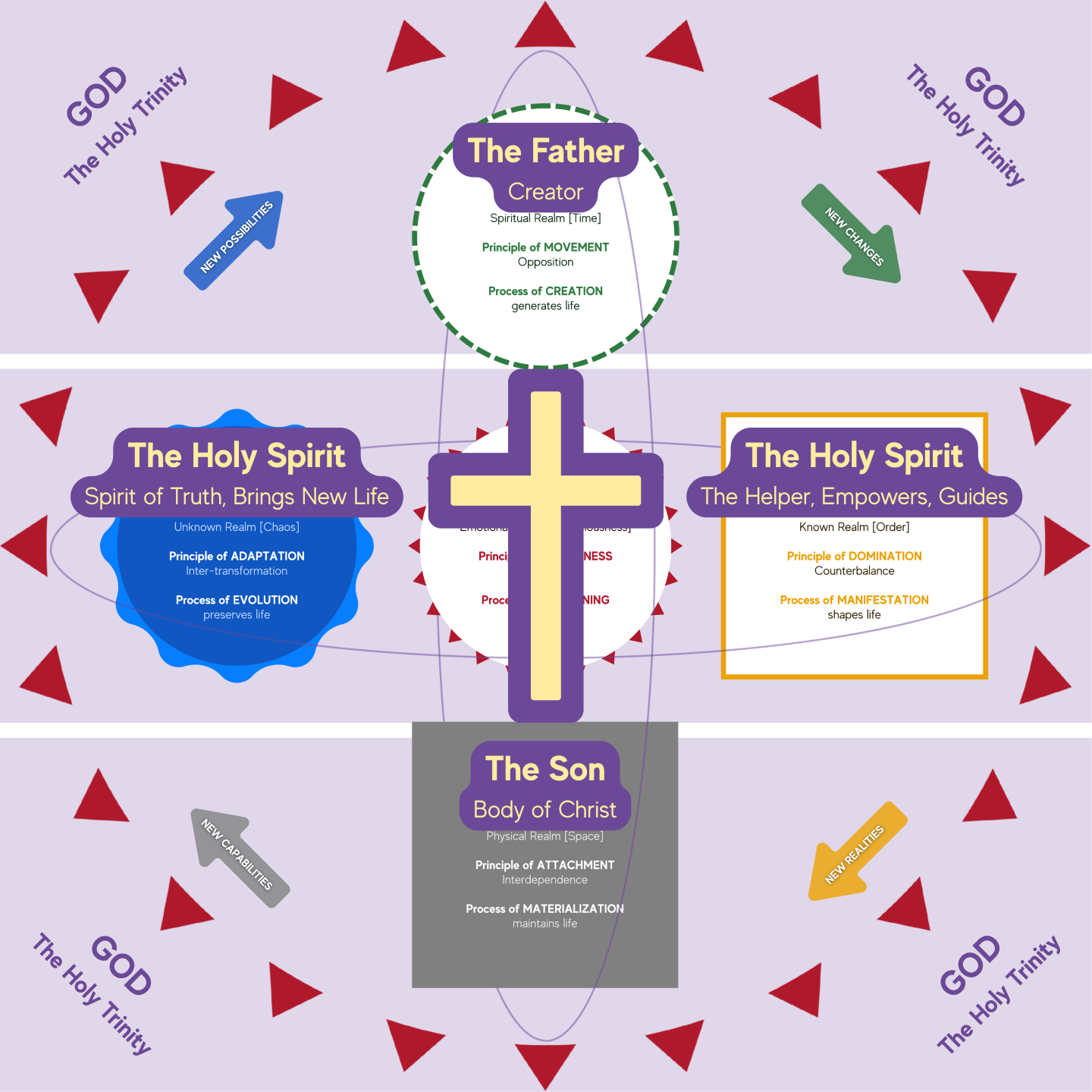
6. The Holy Trinity in Christianity as the sign of the Cross appears in the model, as well.
7. Other possible configurations with different elements as the center as part of a larger model?
8. The 5 spirits depicted as an integrated whole that blends together.
*These are only a handful of many possible considerations and explorations.


The Five Emotions
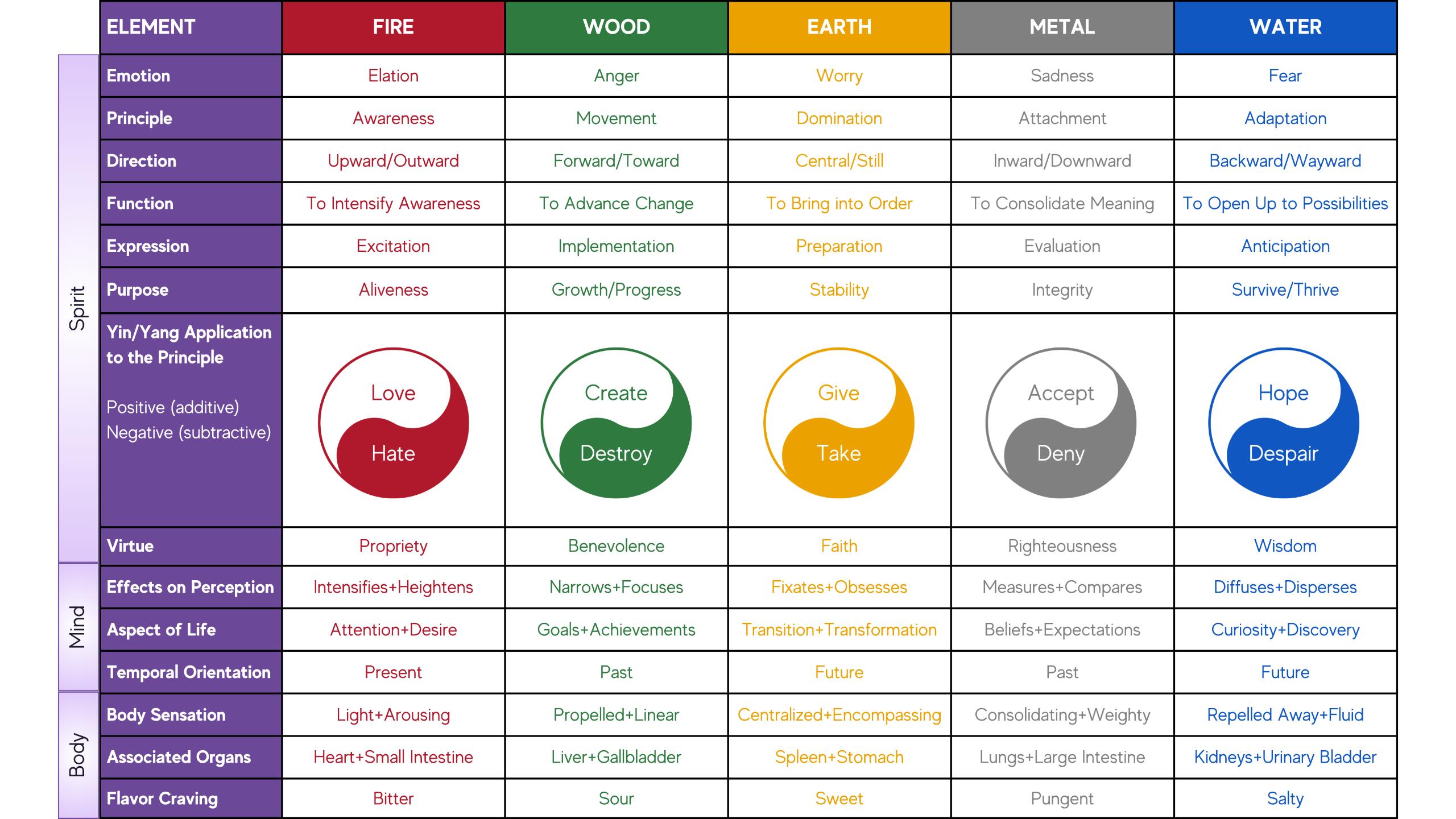
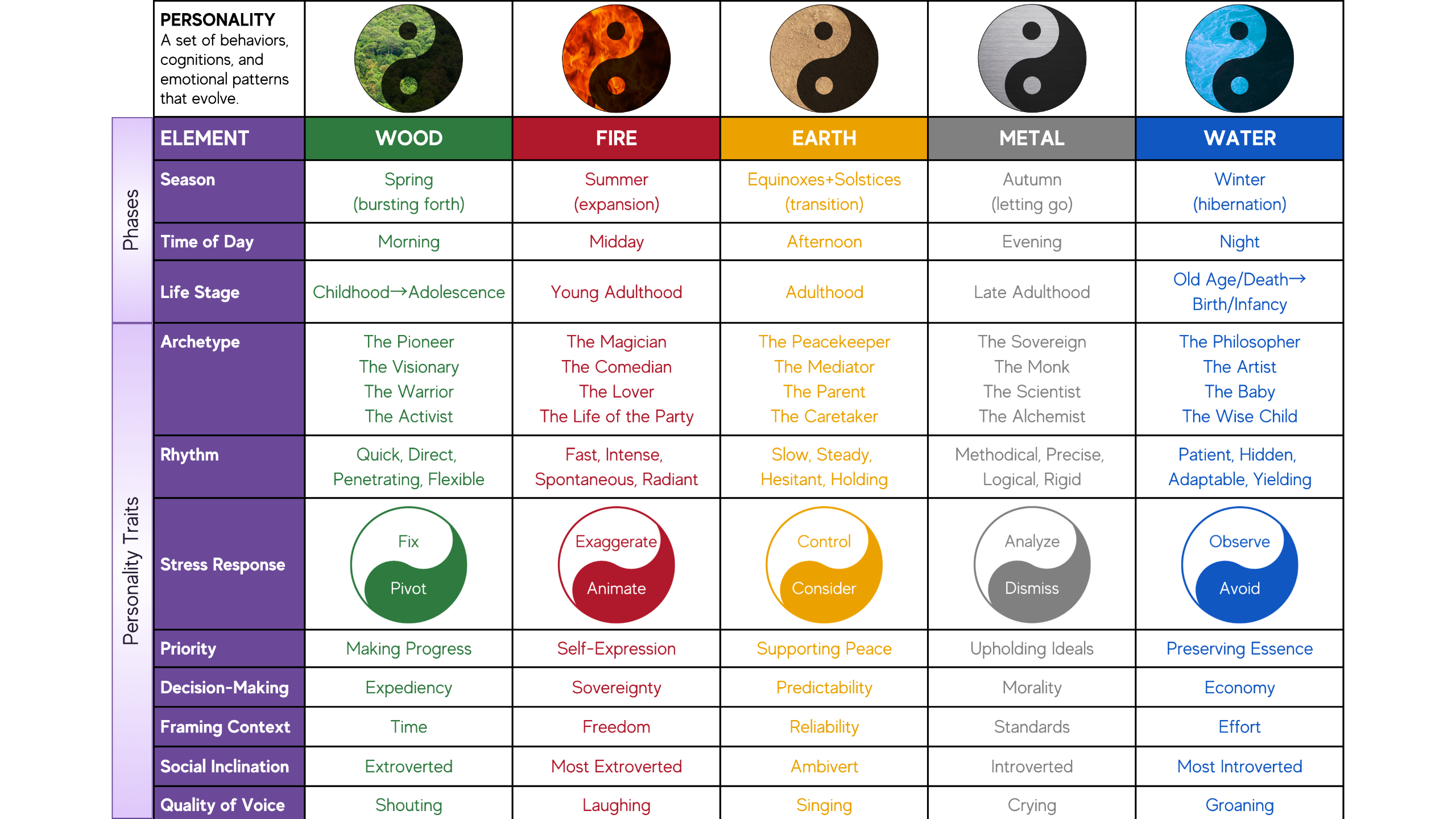
Five Element - Emotional Functions | Five Element - Emotional Expressions | Five Element - Personalities
The function of each emotion was determined by integrating the principle and symbolic direction of an element.
The positive application of an emotion adds the corresponding element's principle and direction.
The negative application of an emotion subtracts the corresponding element's principle and direction.